Várzea, Igapó and Terra Firme: Understanding the Different Ecosystems of the Amazon
- 4 hours ago
- 5 min read
Discover why the Amazon is made up of different ecosystems such as várzea, igapó and terra firme, and experience this diversity in the Mamirauá Reserve with Uakari Lodge.

Why the Amazon Is Not a Single Forest

When people think about the Amazon, the most common image is still that of one immense, continuous green expanse, almost uniform in appearance. But this perception could not be further from reality. The Amazon is not a single forest. It is made up of different ecosystems shaped by water, soil, rivers, and the natural cycles of the region.
For first time visitors, understanding this diversity completely transforms the travel experience. It is not only about observing the forest, but about understanding how it functions.
In the heart of the Mamirauá Sustainable Development Reserve, Uakari Lodge, a sustainable lodge in the Amazon managed in partnership with local riverside communities, offers exactly this kind of immersion. Here, the forest changes throughout the year. Trails disappear beneath the water, trees remain flooded for months, and wildlife adapts its routines to the movement of the rivers. The Amazon stops being an abstract concept and becomes a living organism in constant transformation.
The Three Main Amazon Ecosystems
The main difference between Amazon forest types lies in their relationship with water. The flood and drought cycles create entirely distinct landscapes.
Terra firme: the forest that never floods

Terra firme forest covers most of the Amazon. It occupies higher ground beyond the reach of seasonal flooding.
This ecosystem is home to some of the tallest trees in the Amazon rainforest.
Despite its lush appearance, the soil is often poor in nutrients, relying on the constant recycling of organic matter produced by the forest itself.
The biodiversity of terra firme is immense and includes thousands of plant species, birds, insects and mammals.
According to Brazil’s National Institute of Amazonian Research (INPA), much of the known Amazon biodiversity is associated with this type of forest.
Igapó: the blackwater flooded forest

Igapó forests are flooded by blackwater rivers such as the Rio Negro. These waters contain high concentrations of organic matter and very few mineral sediments.
The result is an environment with an almost surreal appearance. The dark water acts like a mirror, creating silent and cinematic landscapes.
Trees in the igapó have developed specific adaptations to survive long periods underwater. Many spend up to ten months a year with their roots submerged.
This ecosystem has lower plant diversity than terra firme forests, but it supports highly specialized wildlife adapted to blackwater environments, including giant otters, river dolphins, fish species such as peacock bass, and numerous birds closely connected to flooded forests.
Várzea: the forest shaped by the Solimões River

The várzea ecosystem defines both the Mamirauá Reserve and the Uakari Lodge experience.
Unlike igapó forests, várzea forests are seasonally flooded by whitewater rivers such as the Solimões River. These rivers carry nutrient rich sediments originating in the Andes Mountains.
This makes the várzea one of the most productive ecosystems on Earth.
During the flood season, water levels can rise by more than ten meters, completely transforming the landscape. Forest trails become navigable channels, and the ecosystem takes on an entirely new dynamic.
According to the Mamirauá Institute, the Amazonian várzea is among the most biodiverse and productive ecosystems in the Amazon.
Mamirauá: a living laboratory of the Amazon

The Mamirauá Reserve is one of the most important protected areas in the Amazon for the conservation of flooded forests and is part of the UNESCO recognized Natural World Heritage complex.
To support scientific research, biodiversity conservation, and sustainable development in the region, the Mamirauá Institute was created and is now internationally recognized for initiatives that combine science, local communities, and community based tourism.
This is also the habitat of the white uakari monkey, Cacajao calvus calvus, an endangered primate found mainly in the várzea forests of the middle Solimões region. Its striking red face and adaptation to flooded environments have made it a symbol of both the reserve and Uakari Lodge.
Information about the species can be found in the official ICMBio profile on the white uakari monkey.
In addition to the uakaris, the region is home to river dolphins, black caimans, giant otters, hundreds of bird species, and an enormous diversity of fish adapted to the flood cycles.
The forest changes completely throughout the year

One of the most fascinating characteristics of the várzea ecosystem is its constant transformation.
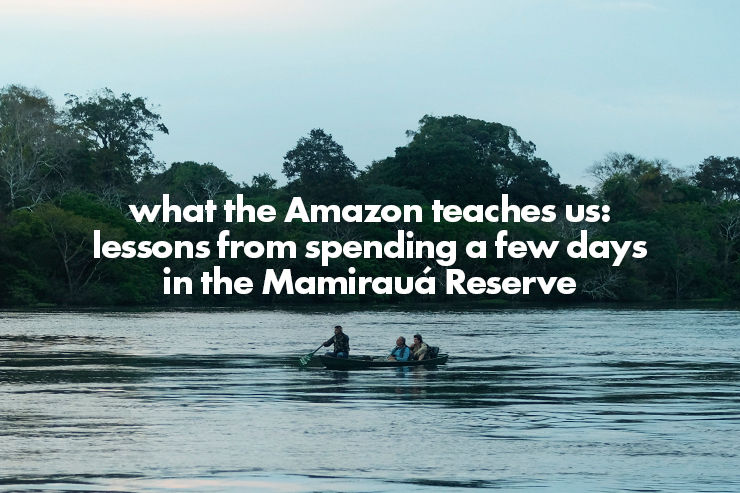
Visitors who arrive in Mamirauá during the flood season encounter a navigable forest. Canoes glide between partially submerged treetops, and transportation happens through channels created by the rising waters.
During the dry season, beaches, trails, and fertile soil emerge. Animals change their behavior, and entirely new landscapes appear.
It is not simply a change of season. It is almost an entirely different forest.
This dynamic directly influences the fauna, flora, and way of life of the riverside communities.
Why does understanding this transform the journey?

Understanding the difference between várzea, igapó, and terra firme completely changes the way you observe the Amazon.
You stop seeing isolated trees and animals and begin to recognize complex ecological connections.
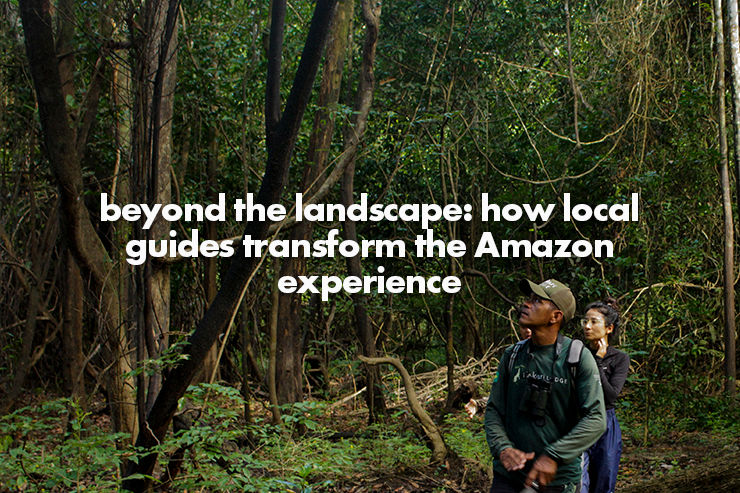
At Uakari Lodge, excursions are led by local guides who share not only wildlife sightings, but also interpretations of how the forest functions.
More than simply identifying species, they explain how each animal adapts to its environment, how rivers shape local life, and why conserving the Amazon also means preserving its ecological diversity.
This is an ecotourism experience built upon traditional knowledge, science, and coexistence with the forest.
To deepen your journey, it is also worth reading our content about ecotourism in the Amazon, how long to stay, and the best time to visit the region.
The Amazon is plural

The Amazon cannot be reduced to a single landscape.
It is made up of várzea, igapó, and terra firme forests. Of whitewater and blackwater rivers. Of flood and drought cycles. Of ecosystems that function at completely different rhythms.
Experiencing the Amazon through Uakari Lodge means immersing yourself in this complexity and understanding that protecting the forest also means protecting its differences.
Experience the Amazon from within

Discovering the Amazon through Uakari Lodge means experiencing the real dynamics of the várzea forest while following the rhythms of the rivers, Amazon biodiversity and the knowledge of the communities that live in this territory.
Programs include floating accommodations, guided excursions and sustainable tourism experiences inside the Mamirauá Reserve.