Lessons from tourism that makes sense
The Amazon today lives amid a dispute of narratives. On one side, the idea of the exotic tied to its valuable resources: foods of incomparable flavor, miraculous oils. On the other, the Amazon of "development," pushed by those who promise grandiose projects of plantations, cattle, and mining, presenting these activities as the answer to "ending poverty" for a people who never asked for these solutions. With a simple scroll through social media, one also finds countless tourism packages promising "connection with the forest," but linking that connection to luxurious experiences lived inside a bubble, where the people and culture of the land are left outside.
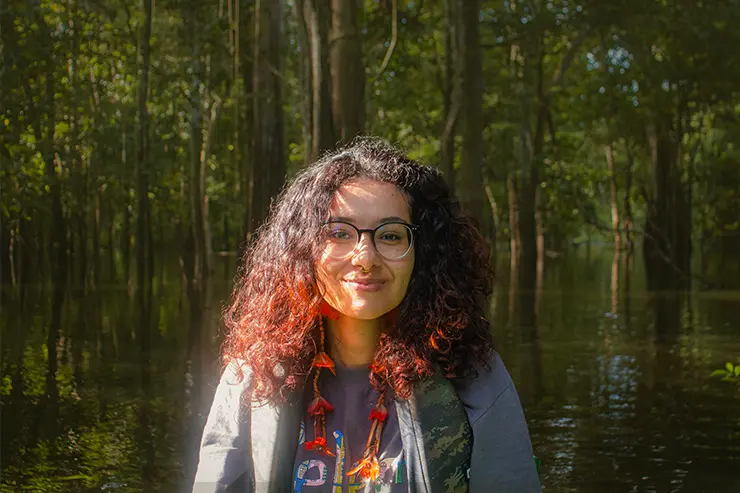
I am a journalist and content creator on the profile @marianadisse. I am a proud Paraense, I live in and communicate about my land to value its culture, break stereotypes, and help protect the Amazon. After spending four nights at Uakari Lodge, at the invitation of the lodge itself, I left with a clear and light heart for having encountered a kind of tourism that is honest, innovative, and true to the land it represents.
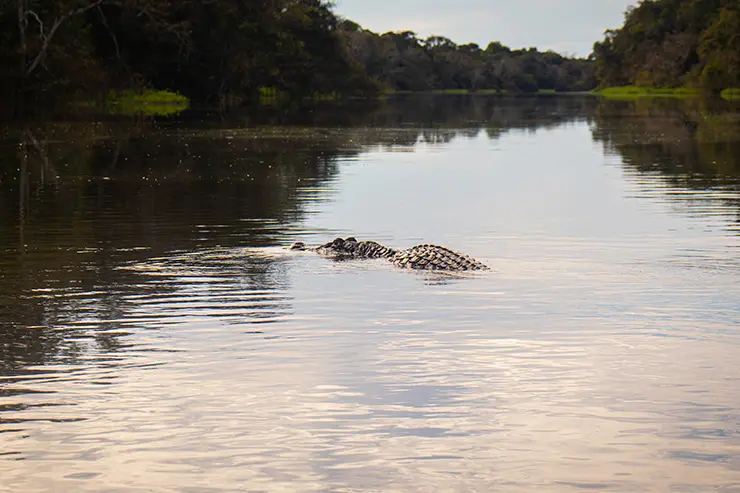
Activities vary according to the season. In the dry season, dolphin and caiman sightings take center stage, along with interpretive walks through the forest. When the flood covers the land and allows us to float by canoe among the treetops, it becomes easier to observe sloths and troops of small monkeys up close. The guides and boat handlers hold nothing back and make us fall in love with every scent, every plant, every taste, every animal. All of this happens with returns to base (the lodge structure itself) for delicious, healthy, and typically regional lunches, snacks, and dinners. During the flood season, we paddled by canoe among treetops more than 10 meters tall.
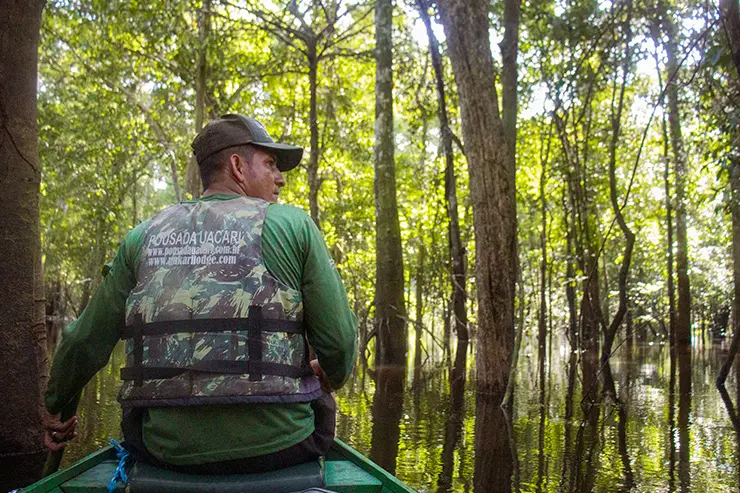
The routine was perfect. It left me wanting more days to contemplate the river and the forest transforming with each flood and each dry season. The structure is genuinely very good, with hammock verandas in the rooms and a game room in the central cabin. Insect repellent is essential, and preparing in advance to deal with unstable internet is also necessary for anyone who plans to rely on it. As an additional activity, I tried the "night in the forest" (included in the seven day package) and I highly recommend it for anyone interested and open to sleeping in a hammock, more immersed in the sounds and atmosphere of the forest. Waking up at the forest house is beautiful and moving, especially with the sound of the howler monkeys.
At Uakari, the exotic gives way to the simplicity of those who know every bend of the river the way they know the corners of their own neighborhood, who know where to pick fruit and what time the animals pass by. It is a richness that we learn to observe with attention and, little by little, to value in every detail.
In this context, if "development" ever seemed like it had to happen at the expense of the forest's life, here everything takes on a different meaning. Under the model of a Sustainable Development Reserve, the traditional communities of Mamirauá live in balance with nature and are, in fact, duly rewarded for it. It is the tourist fee (the one included in your package) that funds improvements to residents' infrastructure and logistics, for example. Nothing could be fairer for those who work day and night to watch over and defend the protected land.
It is no coincidence that this is also one of the important research sites of the Brazilian Amazon, where scientists linked to the Instituto Mamirauá have spent decades studying biodiversity, the sustainable management of natural resources, and the forms of coexistence between traditional communities and the forest.
All of this, combined with the sustainability of the lodge itself, its activities, and its facilities, is what makes this model of community based tourism exemplary for anyone willing to see it. Structures built from sustainably managed wood, energy produced from the sun, and visitor volume and turnover defined by respect for the land's capacity.
The Mamirauá Sustainable Development Reserve will show you that there are other ways to relate to the Amazon and its ways of life. Many possibilities emerge when conservation stops being seen as an obstacle and starts being understood as a path for our lives. Ways that involve neither unchecked exploitation nor an empty romanticizing of the forest, but respect.
In times when so many speak about the future of the Amazon without listening to those who live there, the experience at Uakari is a reminder that protecting the forest and ensuring quality of life for its communities are not opposing goals. On the contrary, they are inseparable parts of the same story.