What changes when a Lodge is managed by local communities? Meet Uakari Lodge
See how community-based management shapes daily life at Uakari Lodge: who makes decisions, how income circulates in the Mamirauá Reserve, and what changes during your stay

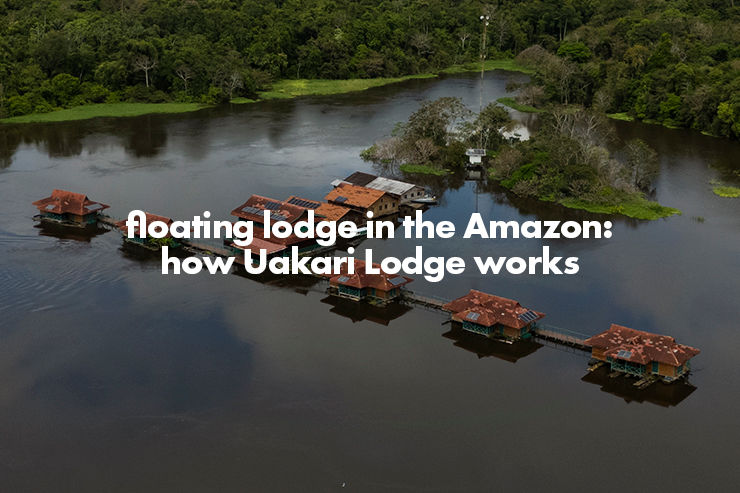
At Uakari Lodge, a floating lodge located in the Mamirauá Sustainable Development Reserve in the Brazilian Amazon, community-based management means that the lodge’s work and decisions are shared between the riverside communities of the Mamirauá Reserve and the Mamirauá Institute. Local residents, organized through the Association of Ecotourism Guides and Support Staff of Mamirauá (AAGEMAM), work on a rotating basis, while income from services and the Socio-Environmental Support Fee is returned to the communities.
Anyone researching accommodation in the Amazon will come across terms such as sustainable tourism, ecotourism and community-based tourism, but it is not always easy to understand what they mean in practice. At Uakari Lodge, communities are involved in the lodge’s operations, decisions about tourism activities and determining how part of the income generated by tourism is used. This model helps explain how community-based management works and how it affects the lodge’s operations and the guest experience.
What is community-based tourism?
In community-based tourism, local residents are at the center of tourism operations. They participate in management, carry out activities, and receive the benefits generated by tourism. In the Amazon, this model creates income and employment as an alternative to the predatory exploitation of natural resources, encourages forest conservation, values traditional knowledge, and helps strengthen local skills. Visitors, in turn, are guided by people who know and live in the area.
The difference becomes clearer when comparing it with other ways of visiting the forest. River cruises prioritize comfort and generally involve less contact with communities. Traditional hotels offer activities, but do not always involve local residents in their operations. Short trips from Manaus offer a glimpse of the landscape, without the immersion of staying within the forest. Community-based tourism is the model in which communities participate in management, operations, and the distribution of benefits, while community-based management addresses the question: “Who makes the decisions?”
How did community-based management begin at Uakari Lodge?

Uakari Lodge is located within the Mamirauá Sustainable Development Reserve, near Tefé, where the Solimões and Japurá rivers meet. The reserve covers 1,124,000 hectares of floodplain forest, which remains flooded for around six months each year, and is part of a Natural World Heritage site. Around 177 riverside communities are located within the reserve, with approximately 11,500 residents, according to the 2011 Census.
Tourism there began with the reception of researchers during the Mamirauá Project in the 1990s. Over time, this reception developed into a structured tourism operation, which became Uakari Lodge. The activity was introduced to the communities as a source of supplementary income alongside existing activities such as fishing and floodplain agriculture. Since 1998, the operation has transferred more than R$6.4 million to communities in the area, and the lodge has been operating for more than 25 years.
Who participates in managing Uakari Lodge?
The lodge operates under co-management between the communities of the Mamirauá Sector and the Mamirauá Institute for Sustainable Development. AAGEMAM, an association created by local residents themselves, organizes the team. In 2025, more than 90 community members worked at the lodge as guides, housekeepers, cooks, carpenters, caretakers, and waitstaff, with some also taking on local supervisory and management roles. The Institute is responsible for research and conservation, and tours follow protocols established by the organization.
The communities involved in co-management meet every two months to define local priorities and carry out activities such as tourism, resource management, and monitoring. Once a year, the presidents and vice presidents of the ten partner communities take part in the Presidents’ Meeting, where revenue, visitor numbers, and guest reviews are presented. Community leaders discuss the results and help guide subsequent decisions. In 2025, the meeting took place in the Boca do Mamirauá community.
Women play a central role in this management structure. At the lodge, they lead administration, coordinate reception and logistics, conduct activities, and help preserve regional cuisine and pass on knowledge about the forest. Researchers Tharyn Machado and Patrícia Rosa, from the Mamirauá Institute, study how gender relations are organized within the reserve’s socioeconomic activities. In September 2025, the Dialogue Cycle among Women in Community-Based Tourism brought participants together to discuss challenges and perspectives in the region.
How is work organized among the communities?
Two management decisions shape how the lodge operates. The first is the rotation system: each person works for around 12 days a month, distributing income opportunities among more families while leaving time for fishing, agriculture, and other community activities. The second is the control of guest numbers. The lodge received 551 visitors in 2023, 676 in 2024, and 653 in 2025, in groups of no more than 24 people. Management keeps the annual number of visitors within limits designed to avoid environmental and social impacts on the reserve.
How does tourism income return to the communities?

The highest in four years, while the fee generated R$36,000. In addition to service-related income, the lodge purchases products and supplies directly from the communities, expanding the families’ sources of income.
The fee is already included in the daily rate, and the communities themselves decide how the money is used through a points-based system created and managed by them. People who take part in conservation activities, such as monitoring lakes, earn points, and the funds are directed to collective projects such as boats for community transportation, community centers, and communication radios.
Local participation also extends beyond tourism. In pirarucu management, led by the Institute since 1999, stocks in managed areas have increased by around 620%. This is a program separate from tourism, but it follows the same principle of involving the people who live in the area.
How does community-based management change the guest experience?

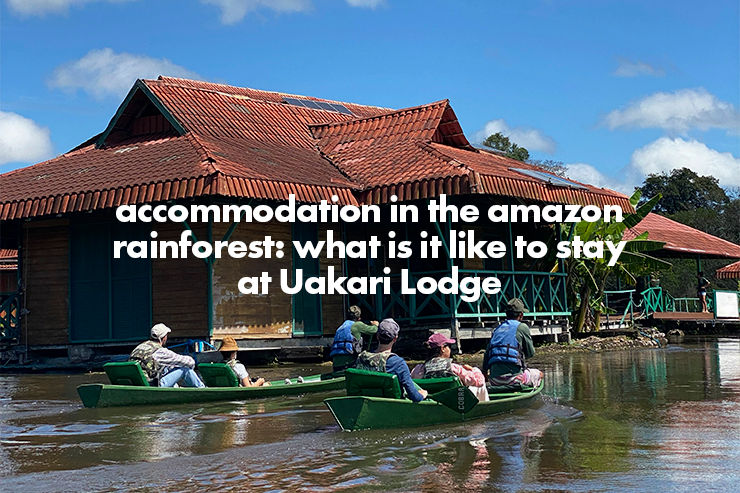
No tour takes place without a local guide, and the people leading groups were born and raised in the reserve. Guide training includes species identification, first aid in tropical forests, emergency procedures, and boat handling. More than 90% of the team is made up of residents from the region.
During visits to communities such as Caburini, Boca do Mamirauá, and Vila de São José, local residents introduce visitors to their communities, while the itinerary also includes conversations with researchers from the Mamirauá Institute. Safety rules, including the prohibition of swimming in the river, are explained during check-in. Since the fee is included in the daily rate, contributing to the communities does not require any additional decision from guests.
The model has also received external recognition. In 2015, the lodge won the Best for Poverty Reduction award at the World Responsible Tourism Awards. In 2025, it was among the finalists for the National Tourism Award in the Community-Based Tourism category.
Follow Uakari on Instagram to keep up with the latest news. We look forward to welcoming you.