Traditional-use plants in the Amazon: how local communities use forest species in their daily lives
Buriti, giant water lily and assacu: discover the useful plants of the Amazon that feed communities, sustain fish and hold up Uakari Lodge

Useful plants of the Amazon are native species used directly by the region's riverside communities, whether as food, as building material, or as part of the balance that sustains fish and other animals in the flooded forest, and three examples found in the Mamirauá Reserve sum up this relationship well: buriti, the giant water lily and assacu.
With every season, the Mamirauá Sustainable Development Reserve changes shape, and the vegetation that withstands this cycle carries a function that goes far beyond scenery. It feeds fish that swim into the igapós during the flood season, provides wood light enough to float, produces fruit that sustains entire families and, in many cases, carries a name, a use and a flowering season that local residents know by heart. It's this set of species, and the relationship communities build with them across generations, that forms what we call the useful plants of the Amazon.
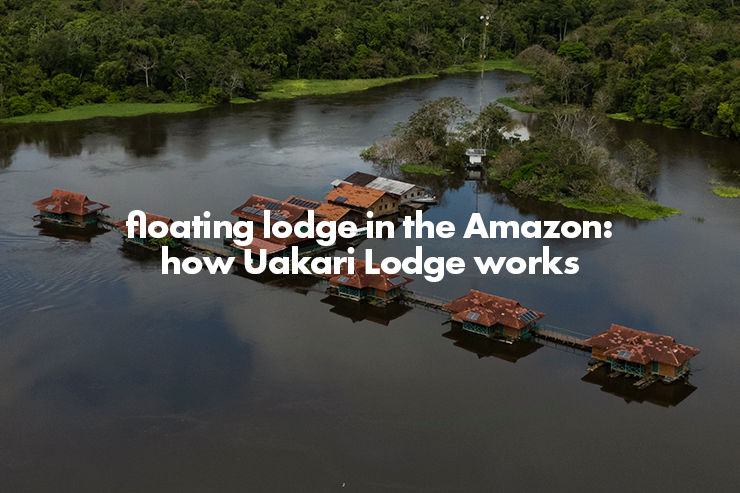
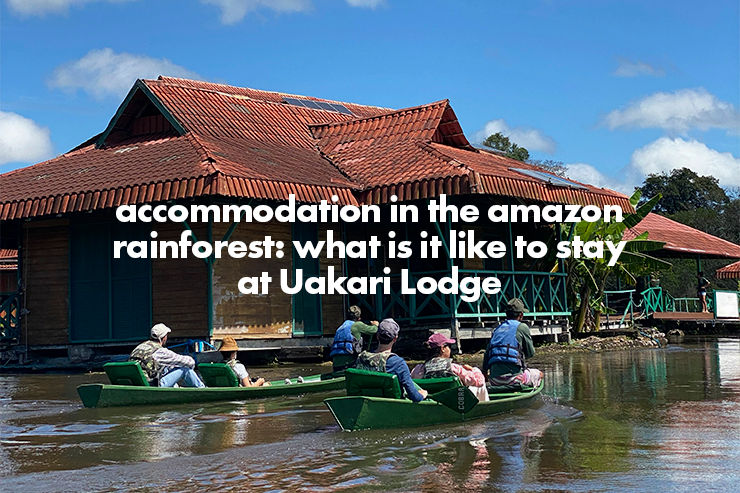
Uakari Lodge is a floating, community based tourism lodge located in the Mamirauá Reserve, and that relationship between forest and community shows up everywhere there: in the structure floating on Lake Mamirauá, in the leaves that appear alongside the canoes during guided tours, and in the explanations local guides share about each species along the way. This article brings together three of these plants, each with a distinct function, to show how the floodplain forest sustains people, fish and the lodge itself, all at once.
Assacu, the tree that holds up Uakari Lodge

Among the native species of the Amazonian floodplain forest, assacu (Hura crepitans) plays a particularly important role in the story of Uakari Lodge, since the lodge floats on large logs of this tree. The species belongs to the Euphorbiaceae family, growing mainly in flooded soils and along riverbanks, and can grow taller than thirty meters, with an extremely thick trunk. Studies by Brazil's Forest Service found an average density between 0.35 and 0.40 grams per cubic centimeter for its wood, which explains its buoyancy and makes assacu a natural choice for an architecture designed to follow the ten to fifteen meter annual variation in the level of the Solimões and Japurá rivers.
The management of the logs used at the lodge is technically overseen by the Mamirauá Institute's community forest management group, in partnership with the riverside communities responsible for sustainably harvesting the wood. The full story behind this relationship between traditional knowledge, science and floating architecture is told in detail in the article Architecture Born from the Amazon.
Buriti, the palm that feeds people, forest and river

If assacu holds up the lodge's structure, buriti (Mauritia flexuosa) feeds much of the life around it. The palm grows in the low, flood-prone terrain that defines the várzea and igapó, forming buriti groves along rivers and streams, and is classified by the Federal University of Amazonas's Flora Econômica as a food, timber, medicinal, ornamental, fiber-producing and oil-producing species all at once, which makes it one of the most widely used plants among Amazonian populations.
Buriti fruit yields an edible oil traditionally used to fry fish, along with drinks, sweets and a starch similar to sago, while the younger leaves supply material for handicrafts and roof thatching, according to technical material from Brazil's Agricultural Research Corporation (EMBRAPA) on the species. This range of uses is also what gives buriti a prominent place in the diet of riverside and indigenous communities across the entire Amazon basin.
Buriti's role, though, isn't limited to what reaches families' tables. During the flood season, when the floodplain forest turns into igapó, the fruit and seeds that fall from trees, buriti palms among them, become the main food source for around 200 fish species that move into the flooded forest looking for food, including tambaqui and pirarucu themselves. It's this link between tree and fish, nearly invisible to an outside observer, that sustains a significant part of the fishing that Mamirauá Reserve communities depend on. To better understand this water dynamic that shapes the forest, it's worth reading the article Rivers of the Amazon: The Waterways That Shape the Forest, which also covers the vegetation typical of the Solimões and Japurá riverbanks.
Giant water lily, useful beyond the spectacle

The giant water lily (Victoria amazonica) tends to be remembered first for the size of its circular leaves, which can exceed two meters in diameter and support considerable weight on the water's surface, but its function in the Amazonian floodplain forest goes beyond the beauty that draws photographers and visitors. According to a report by Portal Amazônia, the plant belongs to the group of PANCs, unconventional food plants, with seeds and parts already recorded in the diet of some Amazonian riverside communities, even though this use isn't widespread across the whole region.
Ecologically, the giant water lily's contribution to life in the várzea is more constant. Its leaves offer shelter to fish and other aquatic animals, functioning as part of the ecosystem that sustains the fauna of Amazonian lakes and streams, as pointed out by researcher Clebiana Nunes, from the Emílio Goeldi Museum, in a report by the newspaper O Liberal. At Mamirauá Reserve, the species appears frequently along the calm margins of the lakes and channels traveled by canoe during Uakari Lodge tours, especially during the flood months.
Plants known by name, by use and by flowering season

None of this information reaches Uakari Lodge visitors by chance. The local guides, residents of Mamirauá Reserve communities, learned to read the forest with a precision that goes far beyond identifying species: they know the trees by name, by use and by flowering season, which turns any trail walk or canoe ride into a lesson on the relationship between forest, water and community. This form of knowledge, built over generations of living alongside the várzea, sits at the center of the lodge's community based tourism model, and it's also what sets a walk guided by someone born in the region apart from a simple look at the scenery.
Read also: Riverside Communities of the Amazon: Who Are the People Who Live in and Preserve Mamirauá Reserve
Where to see these plants at Mamirauá Reserve

Buriti, giant water lily and assacu appear along Uakari Lodge's itineraries in different ways, depending on the season. During the flood, from December to July, canoes glide between treetops and it's possible to see giant water lily leaves floating up close on the calmer lakes, while buriti groves mark the lower edges of the várzea. During the dry season, from August to November, walking trails reveal the ground where these same species take root and reproduce, among river beaches and paths that only exist outside the flood period. To figure out which season best matches the kind of observation you're after, the guide When to Visit the Amazon breaks down the differences between flood and dry season at Mamirauá Reserve and can help with that decision.
Getting to know these plants up close, guided by people who live alongside them every day, is one of the most direct ways to understand the Amazon rainforest not as a fixed backdrop, but as a system in which trees, fish, communities and architecture are deeply connected.
To learn more about lodging and 3, 4 and 7 night itineraries at Uakari Lodge, visit our website and follow our Instagram profile to keep up with life at Mamirauá Reserve.